Thoughts
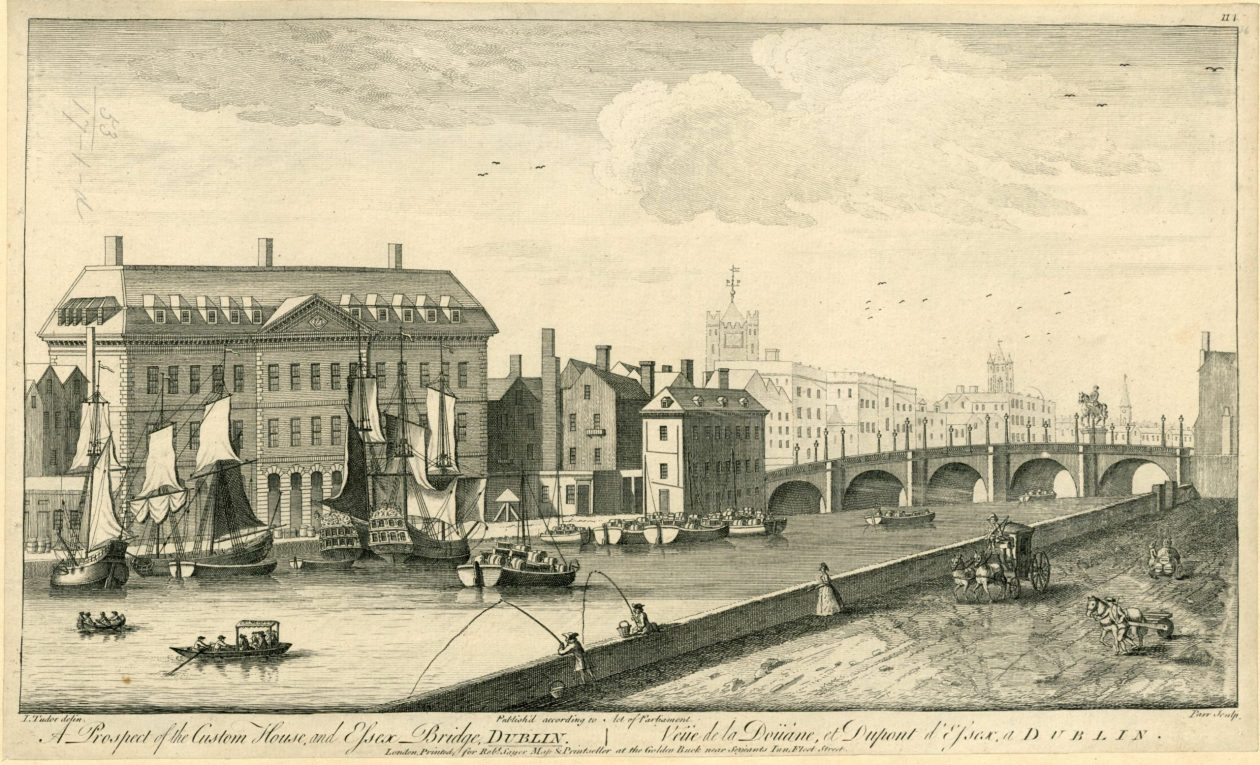
Chronicles from Dublin
Paulo J. S. Bittencourt
Professor of the History Course at UFFS – Erechim Campus
{This is part 2 of the excellent article by the professor. The way everything can be looked upon philosophically is demonstrated in this series of articles.]
After an entire afternoon of concentrated attention on studies, walking the streets can be a privileged choice to empty the mind.
That’s exactly what happened to me yesterday in Dublin.
The maxim that it is possible to save ourselves by ourselves doesn’t seem absurd to me. I know I’m stating something unacceptable to Christians. But a different precept seems much more reliable to me. Without the other, we are doomed to wallow in the senseless mire of a wasted life. In other words, the unexpected cure for our ills may reside exclusively in our relationship with the “other.” In this case, others, as manifestations of the quality of what is distinct from me, “are not hell.” Certainly, this was also the meaning consecrated by the practice of hospitality among the Bantu peoples of Africa. Even Borges’ vision of paradise as some kind of library – a principle that crowns the entrance to the majestic library of Trinity College in Dublin – presupposes a virtually infinite fabric of otherness.
Well.
I left the classroom catatonic, and my willingness to engage in any kind of dialogue was momentarily reduced to zero. Not because I didn’t want to. It simply didn’t seem possible. Without knowing it, I needed to wander unpretentiously through the urban streets like a “flâneur.” [Ah, “flâneur,” literary reference of modernity, your memory, as nourishment for body and soul, I receive with reverence from the poetic hands of Baudelaire.]
But I did not establish the practice that was my salvation by myself. The “other” who saved me, since he saves me not infrequently, and, here, without me even knowing that I needed to be saved, was my partner in love and ideas. I spoke to her, therefore, of my sorrowful mental fatigue. Gently, Karina extended her hand to me, glimpsing in my weariness the auspicious invitation for a contemplative stroll, and, little by little, the inert solidity that plagued me transformed into a flowing lightness.
During the walk, occasional conversations arose.
We discussed the pedagogical experience of revisiting our places as students during our stay in Dublin.
I realized, for example, that perhaps the greatest contribution one can offer as a student to the teaching-learning process does not require outstanding performances that individuality may establish. What would give meaning to the educational experience would reside, rather, in a mostly invisible attitude. I am thinking here of sensitive attention, devoted commitment, in short, to a process whose dynamics are always a collective and relational movement.
We walked for a few kilometers to Phoenix Park, the largest urban park in Europe. It was a beautiful sunny evening, something rare to see in Ireland, even at the end of summer. Karina drew my attention again to the fact that the incidence of sunlight on the lush Irish fields enhances the peculiarity of the tones that justify the epithet “Land of the Emerald” given to the country since ancient times.
Fed occasionally by passersby, geese, seagulls, crows, and other birds paraded, each in its own way, on the surface of the water, in ponds of frank peaceful coexistence. Others skillfully crossed the skies, without sowing, harvesting, or gathering in barns.
We sat and let ourselves rest on the immense meadows with undulating reliefs, interspersed with paved paths. People – walking or running, of various ages, alone and accompanied – and dogs playing without the artificial walls in which we, strange beings, usually enclose them, passed along the paths. Still in the park, after getting up to resume our walk back home, I came across, for the first time, a tree I had always longed to see. I only knew it from recurring mentions of the Celts in epic literature and history books.
I had finally seen an oak tree.
Just as the ash tree was for the Vikings, the oak, one of the most emblematic trees associated with the culture of the continental and insular Celtic lands, was the sacred tree par excellence. From it, the Druids harvested the rare mistletoe, namely the “herb of the Druids.” Moreover, the expression “knowers of the oak” may also encompass the very etymological meaning underlying the name of the infamous body of priest-philosophers responsible for conferring cultural unity among the Celts. The Druids believed that, by knowing the oak, they could also know the mystery of all trees enclosed in their sap.
I then remembered Galileo Galilei, at least in part, and, above all, James Joyce. Glimpsed until then in pages of texts, but finally contemplated by my astonished eyes, the oak that loomed large before me made me think with reverence that nature is a book written equally in poetic verses more concise than the Japanese haiku. But the experience also reminded me of Malachi’s whisper in “Ulysses,” when, observing the Druidic silence, he stated that being awakened from a vision is as painful as being born. But that’s not what I wanted to highlight. What stayed with me from that passage, before the oak tree, when my fingers intertwined with those of my beloved, is that anything, when fully contemplated, “can be the gateway to the incorruptible aeon of the gods.”

Professor Paulo Bittencourt teaches History at the UFFS, Erchim Campus, Rio Grande de Sul. “Federal University of Southern Frontier” [UFFS] is one of the best universities of Brasil with highly qualified professors at the helm. Professor Bittencourt never rejects our request for articles, though he is very busy.
 Nederlandse Vertaling
James Joyce, Kronieken van Dublin
Prof Paulo Bittencourt
Na een hele middag geconcentreerd studeren, kan een wandeling door de straten een heerlijke manier zijn om je hoofd leeg te maken.
Dat is precies wat mij gisteren in Dublin overkwam.
De stelregel dat we onszelf kunnen redden door onszelf, lijkt me niet absurd. Ik weet dat ik iets zeg wat voor christenen onaanvaardbaar is. Maar een ander beginsel lijkt me veel betrouwbaarder. Zonder de ander zijn we gedoemd te verdrinken in de zinloze modder van een verspild leven. Met andere woorden, de onverwachte remedie voor onze kwalen ligt wellicht uitsluitend in onze relatie met de “ander”. In dit geval zijn anderen, als manifestaties van wat van mij verschilt, “niet de hel”. Dit was zeker ook de betekenis die werd gegeven aan de gastvrijheid onder de Bantoe-volken van Afrika. Zelfs Borges’ visie op het paradijs als een soort bibliotheek – een principe dat de ingang van de majestueuze bibliotheek van Trinity College in Dublin siert – veronderstelt een vrijwel oneindige structuur van andersheid.
Welnu.
Ik verliet het klaslokaal in een catatonische toestand, en mijn bereidheid om ook maar enig gesprek aan te gaan, was even tot nul gereduceerd. Niet omdat ik het niet wilde. Het leek gewoon onmogelijk. Zonder het te beseffen, moest ik onpretentieus door de straten van de stad dwalen als een “flaneur”.
[Ah, “flaneur”, literaire verwijzing naar de moderniteit, jouw herinnering, als voeding voor lichaam en ziel, ontvang ik met eerbied uit de poëtische handen van Baudelaire.]
Maar ik heb de praktijk die mijn redding betekende niet zelf ontwikkeld. De “ander” die me redde, want hij redt me niet zelden, en hier, zonder dat ik zelfs maar wist dat ik gered moest worden, was mijn partner in liefde en ideeën. Ik sprak daarom met hem over mijn droevige mentale vermoeidheid. Zachtjes reikte Karina me haar hand toe en zag in mijn vermoeide gemoedstoestand de veelbelovende uitnodiging voor een contemplatieve wandeling. Beetje bij beetje veranderde de lusteloze zwaarte die me zo kwelde in een vloeiende lichtheid.
Tijdens de wandeling ontstonden er af en toe gesprekken.
We bespraken de pedagogische ervaring van het herbezoeken van de plekken die we als studenten hadden bezocht tijdens ons verblijf in Dublin.
Ik realiseerde me bijvoorbeeld dat de grootste bijdrage die je als student aan het leerproces kunt leveren, misschien niet vereist dat je uitmuntende prestaties levert die je individualiteit kan bewerkstelligen. Wat de leerervaring betekenis geeft, schuilt eerder in een grotendeels onzichtbare houding. Ik denk hierbij aan gevoelige aandacht, toegewijde betrokkenheid, kortom, aan een proces waarvan de dynamiek altijd een collectieve en relationele beweging is.
We liepen een paar kilometer naar Phoenix Park, het grootste stadspark van Europa. Het was een prachtige zonnige avond, iets wat je in Ierland zelden ziet, zelfs aan het einde van de zomer. Karina vestigde mijn aandacht er nogmaals op dat de inval van zonlicht op de weelderige Ierse velden de bijzondere tinten versterkt die het land sinds de oudheid de bijnaam “Land van de Smaragd” geven.
Ganzen, meeuwen, kraaien en andere vogels, af en toe gevoerd door voorbijgangers, paradeerden, ieder op zijn eigen manier, over het wateroppervlak in de vijvers waar ze in alle rust samenleefden. Andere vogels doorkruisten behendig de lucht, zonder te zaaien, te oogsten of te verzamelen in schuren.
We gingen zitten en rustten uit op de uitgestrekte weiden met glooiende heuvels, afgewisseld met geplaveide paden. Mensen – wandelend of rennend, van verschillende leeftijden, alleen of met gezelschap – en honden die speelden zonder de kunstmatige muren waarbinnen wij, vreemde wezens, hen gewoonlijk opsluiten, liepen over de paden. Nog steeds in het park, nadat ik was opgestaan om onze wandeling terug naar huis te vervolgen, zag ik voor het eerst een boom die ik altijd al had willen zien. Ik kende hem alleen van de terugkerende vermeldingen van de Kelten in epische literatuur en geschiedenisboeken.
Eindelijk had ik een eik gezien.
Net als de es voor de Vikingen, was de eik, een van de meest emblematische bomen die geassocieerd werden met de cultuur van de continentale en insulaire Keltische gebieden, de heilige boom bij uitstek. De Druïden oogstten er de zeldzame maretak van, oftewel het “kruid van de Druïden”. De uitdrukking “kenners van de eik” omvat wellicht ook de etymologische betekenis van de naam van de beruchte groep priester-filosofen die verantwoordelijk waren voor de culturele eenheid onder de Kelten. De Druïden geloofden dat ze, door de eik te kennen, ook het mysterie van alle bomen in hun sap konden doorgronden.
Toen moest ik, althans gedeeltelijk, denken aan Galileo Galilei, en vooral aan James Joyce. Tot dan toe slechts vluchtig gezien in teksten, maar eindelijk aanschouwd door mijn verblufte ogen, deed de eikenboom die groot voor me opdoemde me met eerbied beseffen dat de natuur een boek is, geschreven in poëtische verzen die beknopter zijn dan de Japanse haiku. Maar de ervaring deed me ook denken aan Malachi’s gefluister in “Ulysses”, toen hij, de druïdische stilte observerend, zei dat ontwaken uit een visioen net zo pijnlijk is als geboren worden. Maar dat is niet wat ik wilde benadrukken. Wat me is bijgebleven van die passage, voor de eikenboom, toen mijn vingers verstrengeld raakten met die van mijn geliefde, is dat alles, wanneer het ten volle wordt beschouwd, “de toegangspoort kan zijn tot het onvergankelijke tijdperk van de goden.”