Thoughts
This is an excellent article about the importance of every corner of the written page, and of the importance of giving credit where it is due.
In Defense of the Footnote
Paulo J. S. Bittencourt
Professor of the History Course at UFFS – Erechim Campus
Once, a professor whom I greatly admire told me that footnotes are absolutely unnecessary. He argued that if a footnote were important, its content should be included in the main body of the text. Otherwise, it is completely superfluous. In both cases, the only option left for the footnote was its extermination.
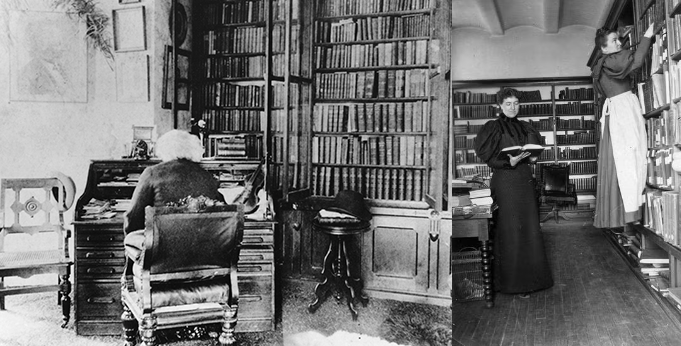
This situation reminded me of one of the possibly legendary accounts of the destruction of the Library of Alexandria. In 640, Caliph Omar is said to have ordered General Anre Ibn Alas to destroy what remained of the Great Library. To do so, he argued that if the books confirmed what is said in the Quran, they were absolutely unnecessary; on the other hand, if they contradicted the Revelation received by the Prophet, they should be not only unnecessary but also abominable. The only way out for one of the most remarkable libraries of antiquity was its own destruction. Of course, this event, if it actually occurred, sounds much more dramatic than the declaration of the canceler of “footnotes,” and thankfully he wasn’t a caliph. But the analogy is valid, because here too, the same argumentative scheme emerges: two seemingly contrary alternatives lead to a single outcome, namely, banishment.

Hedonistic readers continually reduce the place of footnotes, that is, the “ground floor,” to the condition of masses silenced in their right to discreetly point out, among the most avid tribe of the reading community, the most diverse sections of the Universal Library. Here, footnotes are excluded even from linguistic-textual citizenship. Yes, it is often not easy to read footnotes, especially those with almost exhaustive references to various works, many of them in a foreign language. But even of those I consider myself an inveterate reader, and it cannot be overlooked that many explanatory notes stand out as radiant pearls that are valuable in themselves.
At least allow footnotes the right to exist, so that readers who wish to may draw from them. If you cannot tolerate them, skip reading the footnote and acknowledge, once and for all, that you are reading a mutilated work. But, for me, footnotes will always be root-branches of the most vertical trunk-text of Yggdrasil, that colossal tree of life that is reading, the axis of the world balancing it amidst the chaos of absurdity. True linguistic networks of the Library of Babel, footnotes, especially explanatory ones, connect the text, through its branches, to the multiple essence of the earth and the vast immensity of the sky. In a footnote you can enjoy the delight of encountering a critical reading – sometimes categorical, sometimes more verbose – about a fundamental work that you did not know, but that interested you so much that you wanted to read it. It is the Universal Library telling you: “Take and read!”
Footnotes are precisely wormholes to seemingly more distant sections of the Universal Library, weaving a vast architecture that extends beyond, while simultaneously clarifying, the main text.
That line that separates the main text from the footnote is not one of segregation. It is the line of the earth that marks the continuity of the trunk in relation to the roots. What lies below is the foundation, and the fertile ground of the “WHEEL/FOOT” notes has always reminded me of the footprints – the FOOT – of the Buddha’s Body – here, for me, the body of all libraries – enclosing within itself the WHEEL of Dharma, the Book-World, alive and dancing like a dervish, which only readers can turn within themselves.

Professor Paulo Bittencourt teaches History at the UFFS, Erchim Campus, Rio Grande de Sul. “Federal University of Southern Frontier” [UFFS] is one of the best universities of Brasil with highly qualified professors at the helm. Professor Bittencourt never rejects our request for articles, though he is very busy.
 Nederlandse Vertaling
Ter verdediging van de voetnoot
Ooit vertelde een professor die ik zeer bewonder me dat voetnoten absoluut overbodig zijn. Hij betoogde dat als een voetnoot belangrijk was, de inhoud ervan in de hoofdtekst opgenomen moest worden. Anders was het volkomen overbodig. In beide gevallen was de enige optie die voor de voetnoot overbleef, de vernietiging ervan.
Deze situatie deed me denken aan een van de mogelijk legendarische verhalen over de vernietiging van de Bibliotheek van Alexandrië. In 640 zou kalief Omar generaal Anre Ibn Alas opdracht hebben gegeven om de overgebleven delen van de Grote Bibliotheek te vernietigen. Hij redeneerde dat als de boeken de leer van de Koran bevestigden, ze absoluut overbodig waren; aan de andere kant, als ze de Openbaring van de Profeet tegenspraken, waren ze niet alleen overbodig, maar ook verwerpelijk. De enige uitweg voor een van de meest opmerkelijke bibliotheken uit de oudheid was de vernietiging ervan. Natuurlijk klinkt deze gebeurtenis, als die al heeft plaatsgevonden, veel dramatischer dan de verklaring van de afschaffer van “voetnoten”, en gelukkig was hij geen kalief. Maar de analogie is terecht, want ook hier komt hetzelfde argumentatieschema naar voren: twee ogenschijnlijk tegenstrijdige alternatieven leiden tot één uitkomst, namelijk verbanning.
Hedonistische lezers reduceren de plaats van voetnoten, oftewel de “begane grond”, voortdurend tot de positie van een massa die het recht is ontnomen om, te midden van de meest fervente lezers, discreet te wijzen op de meest uiteenlopende delen van de Universele Bibliotheek. Hier worden voetnoten zelfs uitgesloten van taalkundig-tekstueel burgerschap. Ja, het is vaak niet gemakkelijk om voetnoten te lezen, vooral die met bijna uitputtende verwijzingen naar diverse werken, waarvan vele in een vreemde taal. Maar zelfs van die voetnoten – ik beschouw mezelf als een verstokte lezer – valt niet te ontkennen dat veel verklarende noten eruit springen als stralende parels die op zichzelf waardevol zijn.
Geef voetnoten tenminste het recht om te bestaan, zodat lezers die dat willen er gebruik van kunnen maken. Als u ze niet kunt verdragen, sla dan de voetnoot over en erken, voor eens en voor altijd, dat u een verminkt werk leest. Maar voor mij zullen voetnoten altijd de wortels zijn van de meest verticale stam van Yggdrasil, die kolossale levensboom die lezen is, de as van de wereld die het in evenwicht houdt te midden van de chaos van de absurditeit. Als ware taalkundige netwerken van de Bibliotheek van Babel verbinden voetnoten, vooral verklarende, de tekst via zijn takken met de veelvoudige essentie van de aarde en de immense uitgestrektheid van de hemel. In een voetnoot kun je genieten van een kritische lezing – soms categorisch, soms meer uitgebreid – over een fundamenteel werk dat je niet kende, maar dat je zo interesseerde dat je het wilde lezen. Het is de Universele Bibliotheek die je zegt: “Neem en lees!”
Voetnoten zijn precies wormgaten naar schijnbaar verderaf gelegen delen van de Universele Bibliotheek, die een immense architectuur weven die verder reikt dan de hoofdtekst en deze tegelijkertijd verheldert.
De lijn die de hoofdtekst van de voetnoot scheidt, is geen lijn van segregatie. Het is de aardlijn die de continuïteit van de stam ten opzichte van de wortels markeert. Wat eronder ligt, is het fundament, en de vruchtbare grond van de aantekeningen over het “WIEL/VOET” heeft me altijd doen denken aan de voetafdrukken – de VOET – van het Lichaam van de Boeddha – hier, voor mij, het lichaam van alle bibliotheken – dat het WIEL van de Dharma, de Boekenwereld, in zich omsluit, levend en dansend als een derwisj, dat alleen lezers in zichzelf kunnen laten draaien.